Kodi Privacy Tools 2026: Ultimate Guide to Secure Streaming

Kodi Privacy Tools

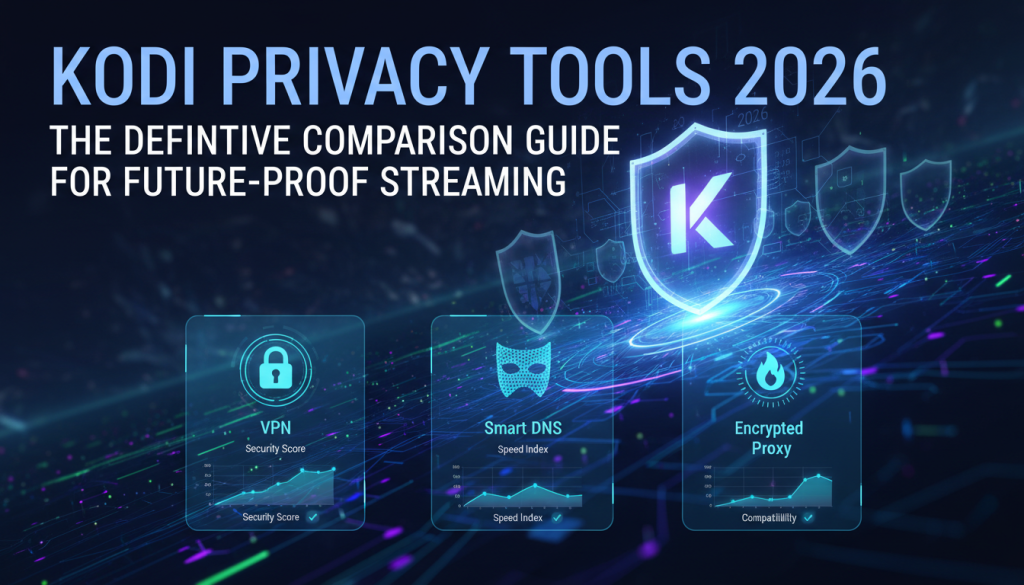
The digital landscape of 2026 presents a complex and evolving challenge for Kodi users seeking to safeguard their privacy, necessitating a proactive and multi-layered approach to security. The rise of sophisticated, AI-powered threats and increasing global data surveillance underscore the critical need for a privacy upgrade. This guide offers a forward-looking, comparative analysis of the best kodi privacy tools 2026 and strategies to ensure your streaming remains private and secure.

Introduction: Why Your Kodi Privacy Needs a 2026 Upgrade

In 2026, safeguarding your Kodi privacy is more critical than ever due to the inherent vulnerabilities of streaming and pervasive data collection practices. Kodi, as a free and open-source media player, allows users to manage and stream content from various sources, including third-party add-ons. While Kodi itself is legal and does not contain malware, unofficial third-party add-ons can introduce significant security and privacy vulnerabilities, exposing users to malware, phishing, and data breaches.

The broader streaming industry is characterized by vast surveillance, with major platforms harvesting extensive personal data for monetization, often with lax privacy controls, particularly concerning children and teens. This pervasive data collection means that Internet Service Providers (ISPs) and other third parties can potentially monitor user activities, making robust kodi privacy tools 2026 essential to prevent unwanted snooping and potential attacks. A stark reminder of these risks was the Kodi Foundation’s data breach in February 2023, where hackers accessed a server storing user emails, usernames, and hashed passwords from their MyBB forum database, affecting over 400,000 users. This incident serves as a clear precedent for the persistent threat of cyberattacks even against reputable open-source projects.

This guide will empower you with the knowledge and tools to effectively secure Kodi from surveillance in 2026, offering a definitive comparison of solutions for anonymous Kodi streaming 2026.

Infographic: Layers of Kodi Privacy Protection

The Evolving Threat Landscape: 2023 vs. 2026 Privacy Challenges

The cybersecurity threat landscape is undergoing a significant transformation, with Artificial Intelligence (AI) emerging as a central force in both attack and defense strategies by 2026. This evolution presents new and intensified privacy challenges compared to previous years.

Key privacy challenges for 2026 include:

* AI-Powered Attacks: Threat actors are moving from using AI as an exception to using it as the norm. AI will become the “attacker’s operating system,” automating reconnaissance, developing exploit chains, crafting convincing phishing campaigns at scale, and generating deepfake voice and video for hyper-realistic impersonations. This includes large language model-assisted malware, automated vulnerability discovery, and adaptive malware. Autonomous AI agents may even manage entire kill chains, potentially leading to the first truly AI-driven worm epidemic. A new class of threats involves “on-device AI malware” generated and modified entirely on-device, without traditional command-and-control traffic, making it challenging for traditional Endpoint Detection and Response (EDR) defenses.

* Ransomware and Extortion: Ransomware will enter a more aggressive phase, remaining a financially disruptive category of cybercrime with escalating activity, particularly targeting third-party providers and exploiting zero-day vulnerabilities. AI agents are expected to accelerate ransomware attacks, potentially becoming part of Ransomware-as-a-Service (RaaS) offerings.

* Identity Compromise: Compromised identities will continue to be a dominant cause of breaches, relying on session token replay, executive impersonation, machine identity theft, and abuse of service accounts. Attacks on enterprise AI systems through prompt injection risks are also critical and growing.

* Deepfakes and Synthetic Content: The proliferation of deepfakes and AI-generated content will reshape digital trust, contributing to rising fraud and impersonation, and challenging existing verification methods.

* Supply Chain Cyber Risk: Attacks on managed service providers, cloud platforms, SaaS applications, and niche subcontractors will increase, as adversaries exploit weak suppliers to compromise multiple organizations.

* ISP and Government Surveillance: ISPs continue to monitor streaming activity, and while legal, this practice infringes on user privacy. Governments globally are also pushing for wider data retention frameworks. The EU, for instance, is preparing ground for new regulations, with a legislative proposal for a “ProtectEU” initiative expected around mid-2026. This aims for “lawful and effective access to data for law enforcement” and could target VPN providers, messaging apps, hosting providers, and cloud storage services for metadata retention (traffic, location, and IP addresses), with an intent to decrypt citizens’ private data by 2030.

In response to these threats, the cybersecurity industry is shifting towards predictive models and AI-driven defenses, with autonomous Security Operations Centers (SOCs) and Zero Trust Security Architectures becoming more prevalent. For Kodi users, this means traditional, reactive security is no longer sufficient; a proactive, layered defense is paramount for Kodi security features and online anonymity Kodi in 2026.

Infographic: The AI-Powered Threat Landscape of 2026

VPNs for Kodi in 2026: A Comparative Deep Dive

VPNs remain the foundational tool for data protection streaming and securing your IP address masking with Kodi, with significant technological advancements expected by 2026. The best Kodi VPN add-ons for privacy in 2026 will offer cutting-edge features.

Criteria for Selecting a Future-Proof VPN

When choosing a VPN for Kodi in 2026, look beyond basic encryption:

* WireGuard Dominance: WireGuard is poised to become the default VPN protocol, superseding OpenVPN due to its streamlined code, superior speed, enhanced security with state-of-the-art cryptography (ChaCha20 encryption), and lower battery consumption. Providers like Mullvad are transitioning to a WireGuard-only service by early 2026.

* AI-Powered VPNs: Expect VPNs to integrate AI for “smarter” security and performance. Features will include intelligent server selection (automatically connecting to the fastest, least congested server), real-time threat detection (blocking suspicious activities and malware), adaptive encryption (balancing security and speed dynamically), and automated kill switch activation.

* Quantum-Resistant Encryption (PQC VPNs): The emergence of quantum computing poses a significant threat to current encryption standards. By 2026, Post-Quantum Cryptography (PQC) will be essential to future-proof data against “harvest now, decrypt later” attacks. NIST finalized PQC standards in August 2024, and leading VPN providers like NordVPN and ExpressVPN are already deploying quantum-resistant encryption across all platforms.

* Audited No-Logs Policy: Ensures that personal data and internet traffic are not stored, with independent third-party audits becoming a standard for transparency.

* Kill Switch: Automatically cuts internet access if the VPN connection drops, preventing IP leaks.

* P2P Support: Essential for users who engage in torrenting via Kodi add-ons or other P2P activities.

* Fast Speeds: Crucial for 4K streaming, ideally maintaining 80% or more of base internet speed, often achieved with WireGuard or proprietary protocols.

* Strong Encryption: AES-256 encryption remains the standard, with PQC readiness becoming vital.

* Broad Device Compatibility: Native apps for Android (Smart TVs), Windows, macOS, iOS, and Linux, along with easy setup guides for various devices.

* Geo-Unblocking Capabilities: To access content restricted to certain regions.

* Multi-Hop & Obfuscation: For enhanced anonymity and bypassing stricter geo-blocks or VPN detection.

🚀 Comparative Deep Dive: Top VPNs for Kodi in 2026

Top VPNs like NordVPN, ExpressVPN, and Surfshark are consistently recommended for their speed, security, and streaming performance with Kodi. Here’s a comparative look at what to expect:

Feature/ProviderNordVPN (2026)ExpressVPN (2026)Surfshark (2026)
Primary ProtocolWireGuard (NordLynx)WireGuard (Lightway)WireGuard
PQC ReadinessImplementing (NIST standards)Implementing (NIST standards)Actively researching/deploying
No-Logs PolicyAuditedAuditedAudited
AI IntegrationSmart server, threat detectionSmart server, adaptive encryptionAuto-kill switch, smart routing
Max Speed (vs. Base)85-90%+80-85%+75-80%+
Server Network6000+ in 60+ countries3000+ in 100+ countries3200+ in 100+ countries
Simultaneous Devices108Unlimited
Kodi CompatibilityExcellent (Native apps, router setup)Excellent (Native apps, router setup)Excellent (Native apps, router setup)
Router-Level SupportYesYesYes
Price (approx. monthly)Mid-rangeHigh-rangeLow-range

Beyond Basic Setup: Advanced VPN Configurations for Kodi

For ultimate Kodi anonymity software 2026, consider:

* Router-Level VPN: Installing the VPN directly on a compatible router encrypts all network traffic, protecting every device connected to your Wi-Fi—including smart TVs, game consoles, and IoT devices that may not support native VPN apps. This offers “always-on” protection.

* Split Tunneling: Allows you to choose which apps use the VPN and which connect directly to the internet. Useful for routing Kodi through the VPN while other traffic remains unencrypted for speed.

* DNS Leak Protection: Ensure your VPN actively prevents DNS leaks, which can reveal your browsing activity to your ISP even with the VPN active. Most premium VPNs offer this by default.

Beyond VPNs: Router-Level & OS Hardening for Ultimate Privacy

For comprehensive privacy solutions for Kodi 2026, a multi-layered approach extending beyond client-level VPN applications is crucial. This involves hardening your network at the router level and securing the operating system of your Kodi device.

Router-Level Privacy (Advanced Comparison)

Installing a VPN on your router is the cornerstone of network-wide privacy. But advanced users can go further:

* Custom Router Firmware (DD-WRT, OpenWrt):

* DD-WRT/OpenWrt vs. Stock Router Firmware: Stock firmware often lacks advanced privacy controls and receives infrequent security updates. Open-source firmware like DD-WRT and OpenWrt can significantly enhance router capabilities and security.

* Features: They offer built-in VPN client support, allowing the entire network to connect through a VPN. They also provide advanced firewall rules for granular control over network traffic, VLAN support for creating segmented networks (e.g., for IoT devices or guests), and Quality of Service (QoS) to prioritize streaming traffic. OpenWrt is generally considered more open and powerful for modern routers, while DD-WRT is a good option for older hardware.

* Security Updates: Custom firmware often provides more frequent security patches than manufacturer firmware, addressing vulnerabilities in older routers.

* Setting up DNS Encryption at the Router Level:

* To prevent ISP snooping on your browsing and streaming habits, implement DNS encryption.

* DoH (DNS over HTTPS) vs. DoT (DNS over TLS) vs. Traditional DNS: Traditional DNS queries are unencrypted and easily monitored. DoH encrypts DNS queries over HTTPS, often used by browsers. DoT encrypts DNS queries over TLS, generally considered more comprehensive for OS-wide or router-level encryption. Configuring DoH or DoT at the router level protects all devices on your network.

* Implementing Network-Wide Ad-blocking and Tracking Protection:

* Pi-hole vs. Router-based Solutions: A Pi-hole is a DNS sinkhole that blocks ads and trackers at the network level, protecting all devices. Some advanced routers or custom firmware offer similar functionalities directly. This significantly reduces the data collected about your online activity.

Operating System Hardening (Kodi-Specific)

Hardening the operating system (OS) of the device running Kodi is another vital step in what are the top privacy settings for Kodi in 2026?

* Comparison of Privacy Settings across Popular Kodi OS Platforms:

* Windows: Configure Windows Privacy settings (telemetry, advertising ID, activity history), disable unnecessary background apps, and ensure Windows Defender or a third-party antivirus is active.

* Linux (e.g., Ubuntu, LibreELEC): Linux-based systems like LibreELEC (popular for Raspberry Pi) are generally more private out-of-the-box. Focus on keeping the OS updated, minimizing installed packages, and configuring a robust firewall (e.g., UFW).

* Android TV/Fire OS: These often have more telemetry. Disable personalized ads, restrict app permissions, and uninstall unnecessary pre-loaded apps. Enable developer options to disable animation scales for better performance and potentially restrict background processes.

* Specific Configurations to Minimize Telemetry, Disable Unnecessary Services, and Enhance Firewall Rules:

* Regularly update the OS to patch vulnerabilities.

* Disable services not essential for Kodi operation (e.g., remote desktop services, unnecessary sharing options).

* Configure your firewall to only allow necessary incoming and outgoing connections for Kodi, blocking all others.

* AI for anomaly detection and robust sandboxing: By 2026, expect OS-level security features, especially on Android-based streaming devices, to leverage AI for detecting unusual activity and sandboxing applications to contain potential threats from malicious add-ons. This will be crucial for Kodi security add-ons 2026.

Emerging Kodi Privacy Add-ons & Services: A Feature Comparison

While specific “2026” privacy-focused Kodi add-ons are not explicitly detailed in predictions, the trend suggests an emphasis on enhancing fundamental privacy principles within the Kodi ecosystem. The focus is on making are Kodi add-ons safe for privacy in 2026? a question with a more confident “yes” for vetted options.

* VPN Integration Add-ons: These continue to be crucial for easy VPN management directly within Kodi, allowing users to connect to servers, manage protocols, and monitor their VPN status without leaving the application. This ensures consistent encryption for all Kodi activities.

* DNS Encryption Tools (DoH/DoT): While often configured system-wide or at the router level, future Kodi add-ons or integrated services might offer simpler, in-app configuration of DNS over HTTPS (DoH) or DNS over TLS (DoT) to encrypt DNS queries, preventing ISP snooping and DNS-based attacks.

* Local Content Scrapers & Debrid Services: To reduce reliance on potentially risky third-party streaming add-ons that access unauthorized content, a privacy-conscious approach emphasizes local media playback (using Kodi as intended for personal media libraries) or integrating with premium debrid services (e.g., Real-Debrid, Premiumize). These services act as intermediaries, fetching streams from various hosts and providing a single, encrypted, high-speed link, thereby obscuring the user’s direct connection to potentially questionable sources and often bypassing ISP throttling.

* Open-Source Security & Maintenance Tools: Add-ons focused on Kodi system maintenance, cache clearing, and detecting broken repositories will indirectly contribute to privacy by ensuring a clean and efficient installation, reducing the attack surface. Vigilance in choosing and regularly updating official add-ons, and avoiding unofficial ones, remains paramount for Kodi data protection utilities 2026.

Evaluating Decentralized VPNs (dVPNs) and Blockchain-Based Privacy Services in 2026

The concept of dVPNs, which leverage blockchain technology to create a decentralized network of nodes, could offer enhanced anonymity and censorship resistance by 2026. However, they currently face challenges with speed, scalability, and ease of use compared to traditional VPNs. While promising for truly secure Kodi streaming 2026 and bypassing centralized control, their widespread adoption and seamless integration into Kodi may still be several years away, primarily due to bandwidth limitations and nascent development. Users interested in experimental decentralized Kodi anonymity software 2026 should monitor projects like Orchid or Mysterium, but traditional VPNs remain the practical choice for most.

Encryption Technologies & Protocols: What’s New for 2026?

Encryption is undergoing a significant transformation by 2026, driven by the need for enhanced security against evolving threats, including the theoretical threat of quantum computers.

Comparing Current vs. Emerging Encryption Standards

* Current Standards (TLS 1.3, AES-256): TLS 1.3 is the current standard for secure internet communication, offering significant improvements over previous versions in speed and security. AES-256 remains the gold standard for symmetric encryption, used by most reputable VPNs. These are highly secure against classical computing attacks.

* Emerging Encryption Standards (Post-Quantum Cryptography – PQC): The most critical advancement is PQC, addressing the existential threat posed by future quantum computers capable of breaking current public-key encryption algorithms (like RSA and ECC). NIST finalized its first set of PQC standards (ML-KEM, ML-DSA, SLH-DSA) in August 2024. By 2026, major VPN providers and other services are implementing these algorithms to protect data from “harvest now, decrypt later” attacks, where encrypted data is collected today for future decryption by quantum computers. Hybrid cryptographic architectures, combining classical and PQC algorithms, will become standard to provide a transitional layer of security.

Advanced Protocols Beyond Traditional VPNs

* DNS over HTTPS (DoH) and DNS over TLS (DoT): These protocols are crucial for encrypting DNS queries, preventing eavesdropping, tampering, and “man-in-the-middle” attacks on DNS traffic. DoT is often preferred for comprehensive, OS-wide encryption, while DoH is widely adopted by browsers. Their widespread adoption is key for a more secure and private internet.

* Advanced VPN Protocols (WireGuard): WireGuard, as discussed, utilizes ChaCha20 encryption, offering robust protection with a smaller codebase and higher performance compared to older protocols. The development of new, low-latency encryption techniques optimized for 5G and IoT environments will also be significant.

* Privacy-Enhancing Technologies (PETs): Beyond core encryption, PETs like homomorphic encryption (analyzing encrypted data without decrypting it), secure multi-party computation (joint computation on private data), and trusted execution environments (isolated processing) will see increased adoption by 2026 to enable data analytics while preserving individual privacy.

The legal and ethical landscape for Kodi users in 2026 is increasingly complex, driven by expanding data protection streaming regulations and heightened enforcement against copyright infringement. A guide to anonymous Kodi streaming 2026 must address these points.

* Legality of Kodi vs. Add-ons: Kodi itself is a legal, open-source media player. However, its legality hinges entirely on how it is used. Unofficial third-party add-ons that provide access to copyrighted content without authorization remain a significant legal risk and can lead to prosecution in many countries. The 2017 Filmspeler judgment in Europe set a precedent, equating streaming illegal content through multimedia players to illegal downloading, making individual streamers potentially liable. There have been crackdowns on “Kodi boxes” pre-loaded with access to illegal services, with platforms like Facebook banning their sale.

* Global Data Privacy Regulations: Strict data privacy laws such as GDPR (Europe) and CCPA (California) impose stringent requirements on data collection, processing, and storage, mandating transparency, user consent, and data minimization.

* California’s New Laws (Effective 2026/2027): California has enacted new data privacy laws with significant impacts:

* AB 45 (Effective January 1, 2026): Prohibits companies from using geofencing to collect health-related data near sensitive facilities and mandates a clear and accessible mechanism for consumers to request deletion of personal information, prohibiting “dark patterns” that frustrate such requests.

* AB 361 (Effective January 1, 2026): Expands data broker registration and disclosure, requiring them to report detailed information about personal data collection practices, including sales to foreign entities, governments, law enforcement, and AI developers. Independent compliance audits will be required every three years.

* AB 656 (Effective January 1, 2026): Requires social media platforms with over $100 million in annual gross revenue to provide an easily accessible “Delete Account” button, ensuring associated personal information is deleted in compliance with CCPA.

* SB 576 (Effective July 1, 2026): California extends federal television broadcast standards to streaming platforms, mandating that commercial advertisements do not exceed the volume of the accompanying video content.

* EU Data Retention: The EU is actively preparing a new framework for wider data retention, with a legislative proposal expected around mid-2026 as part of its “ProtectEU” initiative. This aims for “lawful and effective access to data for law enforcement” and outlines an intent to decrypt citizens’ private data by 2030. Member states largely agree on the need to retain metadata, specifically traffic and location history, and the IP addresses users connect with, potentially impacting VPN providers, messaging apps, and other online services. Privacy experts warn that such measures fundamentally compromise user security.

Ethical Considerations and User Responsibility

Kodi users bear the ethical responsibility of distinguishing between legal and illegal content sources. The open-source nature of Kodi, while offering transparency, also allows for the creation of add-ons that facilitate copyright infringement. Users must be vigilant about the add-ons they install, as many third-party options are unvetted and pose risks beyond legal infringement, including malware and spyware. Ignoring copyright laws not only carries legal repercussions but also contributes to the negative perception of an otherwise legitimate software.

Chart: Global Data Privacy Regulations Enforcement Trends (2020-2026)

Building Your Ultimate 2026 Kodi Privacy Stack: A Layered Approach

An ultimate 2026 Kodi privacy stack requires a layered defense, combining various tools for comprehensive protection against AI-powered threats and increased surveillance. This approach provides privacy solutions for Kodi 2026 tailored for varying user needs.

Recommendations for Different User Skill Levels and Threat Models

* Beginner (Basic Protection): A reputable, fast VPN with a kill switch and audited no-logs policy (e.g., NordVPN, ExpressVPN). Strictly use official Kodi add-ons.

* Intermediate (Enhanced Privacy): Implement a router-level VPN (or use a flashed router with custom firmware). Configure DNS over HTTPS/TLS on your Kodi device or router. Regularly update your OS and Kodi.

* Advanced (Maximum Security): Combine all layers below. Utilize a custom router firmware (OpenWrt) with a VPN, Pi-hole, and custom firewall rules. Harden your Kodi OS extensively. Implement PQC-ready VPN services. Consider dedicated, minimal OS builds for Kodi like LibreELEC.

Step-by-Step Guidance on Integrating Chosen Tools

1. Foundational VPN:

* Action: Subscribe to a premium VPN provider (e.g., NordVPN, ExpressVPN, Surfshark) that offers WireGuard, audited no-logs, a kill switch, and is on the path to quantum-resistant encryption.

* Integration: Install the VPN app directly on your Kodi device or PC. Always ensure it’s connected before launching Kodi.

2. Router-Level VPN (for whole-home protection):

* Action: If your router is compatible, install the VPN directly on it. Alternatively, purchase a pre-configured VPN router or flash your existing router with custom firmware like OpenWrt.

* Integration: All devices connected to this router will automatically benefit from the VPN protection, including smart TVs and IoT devices running Kodi.

3. Secure DNS Configuration:

* Action: Implement DNS over HTTPS (DoH) or DNS over TLS (DoT). This can often be done directly in your router’s settings, within your operating system’s network settings, or via specific apps/add-ons.

* Integration: This encrypts your DNS queries, preventing your ISP from monitoring which domains you access.

4. Hardened Operating System:

* Action: Keep the OS running Kodi (Windows, Linux, Android TV, LibreELEC) regularly updated. Disable unnecessary services and features, and configure strong firewall rules to restrict network access to Kodi only.

* Integration: This minimizes the attack surface and reduces telemetry data collection from your device. For Android, restrict app permissions for Kodi and any related apps.

5. Vetted Kodi Add-ons & Sources:

* Action: Strictly use official Kodi add-ons from the official repository. If using third-party add-ons, ensure they are from highly reputable, community-vetted sources that explicitly state their privacy policies and content legality. Avoid any add-ons linked to pirated content.

* Integration: This dramatically reduces the risk of installing malware or spyware via unofficial sources. Consider using Debrid services for more secure content access.

6. Regular Updates and Maintenance:

* Action: Consistently update Kodi, its add-ons, the operating system, and router firmware. Regularly clear caches and monitor installed add-ons for suspicious activity.

* Integration: Staying current patches vulnerabilities and improves performance.

7. Strong Password Practices:

* Action: Utilize unique, strong passwords for any Kodi-related accounts (e.g., Debrid services, forums) and enable two-factor authentication where available.

* Integration: Prevents unauthorized access to your accounts.

8. Antivirus/Anti-Malware:

* Action: Run reputable antivirus or anti-malware software on the device hosting Kodi, especially if it’s a general-purpose computer.

* Integration: Provides an additional layer of defense against malicious software.

This comprehensive, layered approach provides a robust defense against the sophisticated threats of 2026, maximizing privacy and security for your kodi privacy tools 2026 streaming experience.

Conclusion: Stay Ahead of the Curve

The digital landscape of 2026 is defined by increasingly sophisticated AI-driven cyber threats and intensified data surveillance from both commercial entities and governments. For Kodi users, staying ahead of the curve means adopting a proactive and multi-layered privacy strategy that integrates advanced tools and informed choices. The era of basic VPN protection is evolving into one demanding quantum-resistant encryption, AI-powered security features, router-level protections, and vigilant operating system hardening.

Critically, users must exercise ethical responsibility, carefully vetting Kodi add-ons and respecting copyright laws to avoid legal repercussions. By continuously updating their privacy stack, leveraging emerging encryption technologies, and understanding the evolving threat and regulatory environment, Kodi users can build a future-proof streaming experience that prioritizes their digital freedom and Kodi anonymity software 2026.

Implement these strategies today to secure your streaming future and enjoy Kodi with true peace of mind.

Kodi Privacy FAQ 2026

Frequently Asked Questions About Kodi Privacy in 2026

Q: Is Kodi still safe to use in 2026?

A: Yes, Kodi itself remains a legal, open-source media player. Its safety and legality hinge on how you use it. Using official add-ons from the Kodi repository for legal content is safe. However, unofficial third-party add-ons can pose significant security and legal risks due to malware, data breaches, and copyright infringement. A robust privacy stack, including a VPN and careful add-on selection, is essential for safety in 2026.

Q: Will my current VPN protect me from quantum computing threats by 2026?

A: Most current VPNs rely on cryptographic algorithms that are theoretically vulnerable to future quantum computers. By 2026, leading VPN providers are actively implementing or planning to deploy Post-Quantum Cryptography (PQC) solutions, based on NIST-finalized standards, to future-proof against “harvest now, decrypt later” attacks. It’s crucial to choose a VPN provider that is transparent about its PQC readiness and implementation.

Q: What’s the most important privacy tool for Kodi users in 2026?

A: A premium VPN with an audited no-logs policy, WireGuard protocol, and PQC readiness remains the most foundational Kodi privacy tool 2026. It encrypts your internet traffic and masks your IP address, protecting you from ISP surveillance and geo-restrictions. However, for ultimate privacy, a layered approach combining a VPN with router-level hardening and secure OS configurations is highly recommended.

Q: Are there any new laws affecting Kodi users specifically in 2026?

A: While no direct “Kodi-specific” laws are enacted, new general data privacy and retention laws will significantly impact users. California’s AB 45, AB 361, and AB 656 (effective Jan 2026) enhance consumer data control and data broker accountability. More broadly, the EU’s “ProtectEU” initiative, with legislative proposals expected mid-2026, aims for wider data retention (including metadata like IP addresses) and could impact VPN providers, making your choice of VPN and its jurisdiction more critical.

Q: Should I use a Pi-hole with Kodi?

A: Yes, a Pi-hole (or similar network-wide ad-blocking solution) is an excellent addition to your kodi privacy tools 2026 stack. It blocks ads, trackers, and malicious domains at the DNS level for all devices on your network, including your Kodi setup. This reduces data collection and improves the overall streaming experience by eliminating intrusive advertisements.


Leave a Reply

Your email address will not be published. Required fields are marked *