Streaming sticks have revolutionized how we consume media, transforming any television into a smart entertainment hub. In 2026, two major players known for their affordability and rich feature sets continue to dominate the market: Amazon’s Fire TV Stick and Xiaomi’s Mi TV Stick lines. With constant updates and new models, users find it challenging to discern the best option for their streaming needs.
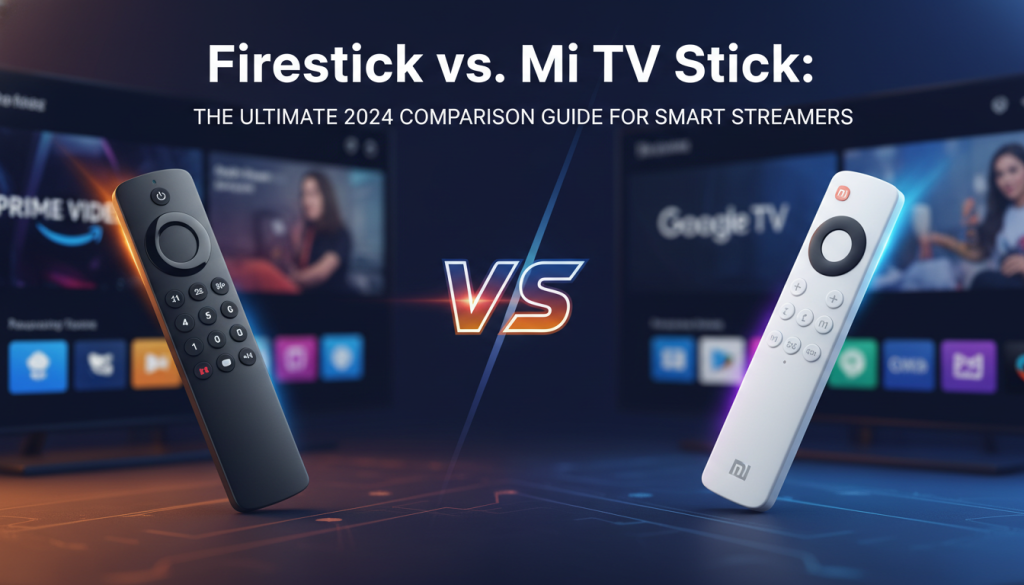
This comprehensive guide cuts through the noise, offering an objective and detailed, model-specific comparison of the Firestick vs Mi TV Stick.
We’ll delve into features, specifications, user experience, and pricing to help you make an informed decision and optimize your smart streaming setup.
Meet the Contenders: Firestick vs. Mi TV Stick Families
Understanding the current lineups is crucial, as both brands have refined their offerings. A generic brand-level analysis simply won’t suffice; the specifics of each model truly differentiate them.
Amazon Fire TV Stick Family
Amazon’s flagship streaming stick is the Fire TV Stick 4K Max (2nd Gen), a powerhouse Amazon launched in late 2023. Close behind, Amazon also released the Fire TV Stick 4K (2nd Gen) in 2023, offering robust 4K capabilities. For those seeking a Full HD experience, the Fire TV Stick HD (2024 model) debuted in October 2024, effectively replacing the standard Fire TV Stick and Fire TV Stick Lite. While Amazon updated its name, it largely provides the same 1080p experience as its 2020 predecessors, focusing on essential smart streaming.
Xiaomi Mi TV Stick Family
Xiaomi’s primary 4K contender remains the Xiaomi TV Stick 4K. Xiaomi launched it globally in late 2021/early 2022, running Android TV 11, and it continues to be relevant in 2026. While some reviews refer to it with a “2024” suffix, Xiaomi has not widely publicized a new generation with significantly upgraded specifications this year. For an entry-level option, Xiaomi still offers the Mi TV Stick (1080p), an older model capped at Full HD resolution.
Head-to-Head: Model-Specific Comparisons (Features, Specs & Pricing)
In this head-to-head section, we’ll dive into a model-specific comparison of the Firestick vs Mi TV Stick, focusing on their top-tier offerings. The Amazon Fire TV Stick 4K Max (2nd Gen) and the Xiaomi TV Stick 4K are the main contenders for 4K streaming.
Premium Performance Showdown: Fire TV Stick 4K Max (2nd Gen) vs. Xiaomi TV Stick 4K
| Feature | Amazon Fire TV Stick 4K Max (2nd Gen) | Xiaomi TV Stick 4K |
| Resolution | Up to 4K HDR at 60fps | Up to 4K Ultra HD |
| Processor (CPU) | 2.0 GHz Quad-core (MediaTek MT8696T / 4x ARM Cortex-A55) | Quad-core Cortex-A35 (Amlogic S905Y4) |
| GPU | Imagination Tech GE9215 (Up to 850 MHz) | Mali-G31 MP2 |
| RAM | 2GB LPDDR4 | 2GB |
| Storage | 16GB | 8GB (Approx. 5.2GB user-available) |
| Operating System | Fire OS 8 (based on Android 11) | Android TV 11 (with Google TV interface) |
| Wireless | Wi-Fi 6E, Bluetooth 5.2 + BLE | Wi-Fi 5 (802.11ac) 2.4GHz/5GHz, Bluetooth 5.0 (some sources say 5.2) |
| HDR Formats | Dolby Vision, HDR10, HDR10+, HLG | Dolby Vision, HDR10, HLG, VP9 Profile-2 (Note: HDR10+ support is sometimes disputed) |
| Audio | Dolby Atmos, Dolby Digital, Dolby Digital Plus, Dolby TrueHD passthrough, DTS-HD passthrough | Dolby Atmos, DTS HD |
| Voice Assistant | Amazon Alexa | Google Assistant (Built-in Chromecast) |
| Remote | Alexa Voice Remote Enhanced (Dedicated buttons for Alexa, Recent, Settings, Apps) | Mi Voice Remote (Dedicated buttons for Google Assistant, Netflix, Prime Video) |
| Pricing (Approx.) | £70 / $60 (frequently discounted to ~$35-$50) | $35-$40 (Highly variable by retailer, sometimes listed around $60 USD) |

Entry-Level Options: Fire TV Stick HD (2024) vs. Mi TV Stick (1080p)
While the detailed specs above focus on 4K, both brands offer more basic 1080p models. The Fire TV Stick HD (2024 model) replaces previous entry-level Fire Sticks, offering a reliable Full HD streaming experience. Similarly, the Mi TV Stick (1080p) provides access to Android TV features at a lower resolution. These models are ideal for secondary TVs or users who don’t have 4K displays and are seeking the most budget-friendly entry into smart streaming. They typically feature less powerful processors, lower storage, and Wi-Fi 5 connectivity, and their more accessible price points reflect these features.
Ecosystem Deep Dive: Fire OS vs. Android TV / Google TV
The underlying operating system heavily influences user experience, app availability, and smart home integration, differentiating the Firestick vs Mi TV Stick.
User Interface & Navigation
Fire OS (Amazon Firestick): Amazon designed this Linux-based OS as a heavily customized version of Android to deeply integrate with its services. The interface prioritizes Amazon content (Prime Video, Amazon Music) with prominent rows and recommendations. While intuitive for Amazon users, Amazon’s content promotion can sometimes make it feel ad-heavy.
In contrast, Android TV / Google TV (Mi TV Stick): The Xiaomi TV Stick 4K runs Android TV 11, often with the Google TV interface. This offers a more content-discovery-focused layout than older Android TV versions, organizing content across various apps. It generally presents a more neutral content presentation compared to Fire OS, though Google’s services are still prominent.
App Availability & Sideloading
* Fire OS: It provides extensive app availability via the Amazon Appstore. While it includes most popular streaming services, users might find some niche Android apps missing or requiring sideloading, which is generally possible but less straightforward than on native Android TV.
* Conversely, Android TV / Google TV: It offers access to thousands of apps through the Google Play Store, giving users a vast range of options. Built-in Chromecast is a key feature, allowing easy casting from phones, tablets, or laptops, which Fire OS lacks natively.

Best Fire TV Alternatives for 2026: Top Picks & Comparisons
Read More →Voice Assistants
* Alexa (Firestick): Amazon built in and deeply integrated Alexa, which offers robust voice control for content search, smart home commands, and general queries. The Alexa Voice Remote Enhanced on the 4K Max (2nd Gen) improves usability with dedicated buttons.
* On the other hand, Google Assistant (Mi TV Stick): The primary voice assistant, Google Assistant, enables content search, smart home control, and general queries. Its capabilities are extensive and align with the Google ecosystem.
Smart Home Integration
* Firestick: It offers excellent integration for users within the Amazon Alexa ecosystem. Fire TV devices can act as hubs or controllers for Alexa-compatible smart home devices, allowing voice commands for lights, thermostats, and more directly from your TV.
* In contrast, the Mi TV Stick: It integrates seamlessly with the Google Home ecosystem. Google Assistant allows control over Google Assistant-compatible smart devices, making it a natural fit for those invested in Google’s smart home platform.
Content Recommendations & Personalization
Both platforms use algorithms to recommend content based on viewing history and preferences. Fire OS leans heavily into pushing Amazon Originals and Prime Video content. Conversely, Android TV/Google TV aims for a broader, cross-platform content discovery experience, often highlighting Google’s own services (YouTube, Google Play Movies).
Performance & User Experience: Beyond the Specs
When evaluating the Firestick vs Mi TV Stick, real-world performance and user experience go beyond mere specifications to dictate daily satisfaction.
UI Fluidity & Responsiveness
* Fire TV Stick 4K Max (2nd Gen): Users praise its “incredibly snappy” performance, quick app loading, and smooth navigation. Its faster 2.0 GHz quad-core processor and Wi-Fi 6E support deliver a noticeable speed boost over previous generations.
* Xiaomi TV Stick 4K: It generally offers “reliable and uncomplicated functionality.” Reviewers in 2026 still deem it “worth to buy” and “working quite fast” for its price, though some older reviews noted that the remote could occasionally take a fraction of a second too long to respond. It delivers a bloatware-free Android TV 11 OS experience.
App Loading Times
The Fire TV Stick 4K Max (2nd Gen) with its enhanced processor and storage generally boasts faster app loading times for popular streaming apps like Netflix, Prime Video, YouTube, and Disney+. The Xiaomi TV Stick 4K, while capable, might show a slight delay in comparison due to its less powerful CPU and smaller storage.
Remote Control Experience
* Fire TV Stick 4K Max (2nd Gen): The Alexa Voice Remote Enhanced is functional, comfortable, and includes dedicated streaming service buttons, plus new Recent and Settings buttons, improving usability.
* Xiaomi TV Stick 4K: The Mi Voice Remote is Bluetooth-enabled and features dedicated buttons for Google Assistant, Netflix, and Prime Video, offering convenient one-touch access to key services.
Wi-Fi Performance & Stability
The Fire TV Stick 4K Max (2nd Gen) is the industry’s first streaming stick to include and support Wi-Fi 6E. This provides smoother 4K streaming with lower latency and faster speeds (requires a compatible router), making it future-proof. The Xiaomi TV Stick 4K uses dual-band Wi-Fi 5 (2.4GHz/5GHz), which is perfectly adequate for 4K streaming but doesn’t offer the cutting-edge benefits of Wi-Fi 6E.
Overheating & Long-term Reliability
Both devices are generally reliable. We find no widespread reports of significant overheating issues for either the Fire TV Stick 4K Max (2nd Gen) or the Xiaomi TV Stick 4K under normal usage. Long-term reliability tends to be good, though software updates and maintaining clear ventilation can help extend device lifespan.
Advanced Audio/Video Codec Support & Passthrough
How to Set Up Google TV for Beginners: 2026 Visual Guide
Read More →For videophiles and audiophiles, codec support is paramount for a premium viewing experience.
4K HDR Capabilities
* Fire TV Stick 4K Max (2nd Gen): It supports 4K HDR up to 60fps with comprehensive support for Dolby Vision, HDR10, HDR10+, and HLG.
* Xiaomi TV Stick 4K: It supports 4K video content playback, Dolby Vision, HDR10+, and HLG. It’s important to note that while official specs often list HDR10+, some reviews suggest a potential lack of robust support for HDR10+ content.
Audio Codec Support
* Fire TV Stick 4K Max (2nd Gen): It offers excellent audio capabilities, supporting Dolby Atmos audio and up to 7.1 surround sound.
* Xiaomi TV Stick 4K: It is compatible with DTS HD and Dolby Atmos (including passthrough), offering high-quality immersive audio experiences.
AV1 Codec Support
Both the Fire TV Stick 4K Max (2nd Gen) and the Xiaomi TV Stick 4K include AV1 codec support. This is a significant advantage for future-proofing, as AV1 allows for higher quality streaming with maximum compression, leading to better visuals at lower bandwidths.
Gaming Capabilities & Cloud Gaming Integration
In the Firestick vs Mi TV Stick comparison, gaming capabilities are becoming an increasingly important factor, even though these devices are not dedicated gaming consoles.
Casual Gaming Experience
Both devices are suitable for casual Android games available from their respective app stores (Amazon Appstore vs. Google Play Store). They can typically handle light games and emulators, and both support Bluetooth controllers for a better gaming experience.
Cloud Gaming Services
* Firestick: Amazon Fire TV Stick 4K models, including the 4K Max (2nd Gen) and 4K (2nd Gen), fully support Xbox Cloud Gaming (beta). This allows Game Pass Ultimate members to play hundreds of cloud-enabled Xbox games directly on their TV with a compatible Bluetooth controller, without needing a console. Amazon also supports its own cloud gaming service, Luna.
* Mi TV Stick: The Xiaomi TV Stick 4K allows for playing a “wide range of Android games.” While Android TV theoretically supports apps like Xbox Cloud Gaming or GeForce Now if available in the Play Store and if the stick’s performance is adequate, it does not feature specific integration or prominent advertising for these major cloud gaming services as pronouncedly as Firestick.
Privacy, Data Collection, and Ad Experience
Privacy and advertising are growing concerns for users of connected devices.
Data Collection Practices
* Firestick: Amazon’s Fire TV devices collect a significant amount of data on device usage, app usage, and over-the-air viewing. Amazon uses this data for targeted advertising within its retail and advertising ecosystem. Amazon states they do not sell personal information to others.
* Mi TV Stick: As an Android TV device, the Mi TV Stick falls under Google’s data collection policies. Android TV and Google services generally collect user data for personalized experiences and advertising, similar to other Android devices.
Ad Frequency & Placement
* Fire OS: Amazon’s prominent promotion of its own content and services, often integrating ads directly into content discovery screens, can sometimes make the Fire TV interface feel more ad-heavy.
* Android TV / Google TV: Users generally consider it less intrusive with ads compared to Fire OS, though it still presents ads for Google-related content and services. Reviewers note the Xiaomi TV Stick 4K for its bloatware-free Android TV 11 OS experience, with only major streaming apps pre-installed.
The ONLY Essential Streaming Apps Guide You’ll Need for 2026
Read More →Privacy Settings & User Control
Firestick: Users can opt-out of certain data collection permissions and interest-based ads through the device’s privacy settings (Settings > Preferences > Privacy Settings). Turning off these settings may not reduce the number* of ads but makes them less personalized.
* Mi TV Stick: Users typically have control over privacy settings within their Google account and the Android TV interface, allowing management of data sharing and ad personalization.
Account Requirements
Both devices require an account to function: an Amazon account for Firestick and a Google account for the Mi TV Stick. These accounts link your purchases, preferences, and services.
Best Use Cases: Who Should Buy Which?
Choosing between Firestick vs Mi TV Stick depends heavily on your existing ecosystem, priorities, and budget.
* Best for Budget Users: The Xiaomi TV Stick 4K often offers a better price-to-performance ratio for a 4K streamer, especially when discounted. For 1080p, the Mi TV Stick (1080p) is very competitive.
* Best for Amazon Ecosystem Users: The Fire TV Stick 4K Max (2nd Gen) is the clear winner if you’re a Prime subscriber, heavily use Alexa, or have Amazon Music and other Amazon services.
* Best for Google Ecosystem Users: The Xiaomi TV Stick 4K is ideal if you prefer the Android TV/Google TV interface, use Google Assistant, rely on the Google Play Store, or frequently use Chromecast.
* Best for Smart Home Integration: Both integrate well with their respective ecosystems. Choose Firestick for Alexa-centric homes, and Mi TV Stick for Google Home-centric setups.
* Best for Travel: Both are highly portable. The built-in Chromecast on the Mi TV Stick might offer slightly more flexibility for casting in various environments, but both are excellent travel companions.
* Best for Audiophiles/Videophiles: The Fire TV Stick 4K Max (2nd Gen) edges out with comprehensive HDR (Dolby Vision, HDR10+) and audio (Dolby Atmos) support, plus Wi-Fi 6E for flawless high-bandwidth streaming. The Xiaomi TV Stick 4K is also very capable with similar codec support, but the Firestick offers a slightly more premium and reliable experience.
* Best for Cloud Gaming: The Fire TV Stick 4K Max (2nd Gen) is superior due to its direct integration and support for Xbox Cloud Gaming and Amazon Luna, making it a viable alternative to a console for Game Pass Ultimate members.
Pros and Cons Summary
Amazon Fire TV Stick Family (Focusing on 4K Max 2nd Gen)
* Pros:
| Amazon Fire TV Stick 4K Max (2nd Gen) | Xiaomi TV Stick 4K |
| Incredibly snappy performance (Fastest Fire TV Stick) | Affordable price and strong value. |
| Future-proof Wi-Fi 6E. | Features Android TV / Google TV interface. |
| Generous 16GB storage. | Includes built-in Chromecast. |
| Excellent HDR (incl. Dolby Vision & HDR10+). | Good 4K HDR (incl. Dolby Vision & HDR10+). |
| Integrates Xbox Cloud Gaming and Amazon Luna. | Supports Dolby Atmos and DTS HD audio. |
| Features an enhanced Alexa Voice Remote. | Generally bloatware-free OS. |
* Cons:
| Amazon Fire TV Stick 4K Max (2nd Gen) | Xiaomi TV Stick 4K |
| Fire OS interface can feel Amazon-centric and ad-heavy. | Less powerful processor than the Fire TV Stick 4K Max. |
| No native Chromecast or AirPlay support. | Only 8GB storage. |
| Higher initial price than some rivals. | Uses older Wi-Fi 5 (not Wi-Fi 6/6E). |
| Limits gaming to Android games; less clear cloud gaming. | |
| Some older reviews noted occasional UI sluggishness. |
Conclusion: Making Your Informed Decision
For smart streamers in 2026, the choice between the Firestick vs Mi TV Stick ultimately hinges on your ecosystem preference, performance demands, and budget. Both devices offer robust 4K streaming capabilities, but they cater to slightly different user profiles.
The Amazon Fire TV Stick 4K Max (2nd Gen) stands out for those prioritizing cutting-edge speed, future-proof Wi-Fi 6E connectivity, and seamless integration with Amazon’s services and Xbox Cloud Gaming. It delivers a premium, incredibly responsive streaming experience, albeit with Amazon’s content front and center. If you’re deep in the Amazon ecosystem or want the best performance for cloud gaming and future-proof tech, this is the superior, albeit often pricier, choice.
On the other hand, the Xiaomi TV Stick 4K, while Xiaomi has not recently updated it with a new generation, remains a highly competitive and compelling option. Its strong value proposition, native Android TV/Google TV experience, and built-in Chromecast make it an excellent choice for those who prefer Google’s interface, value easy casting, or are on a tighter budget. It provides reliable 4K HDR streaming and a more open app ecosystem, offering a commendable experience for its cost.
Ultimately, assess your priorities: if top-tier performance, Wi-Fi 6E, and integrated cloud gaming are paramount, invest in the Fire TV Stick 4K Max (2nd Gen). If value, the open Android TV experience, and built-in Chromecast are more important, the Xiaomi TV Stick 4K delivers a superb streaming solution.
`