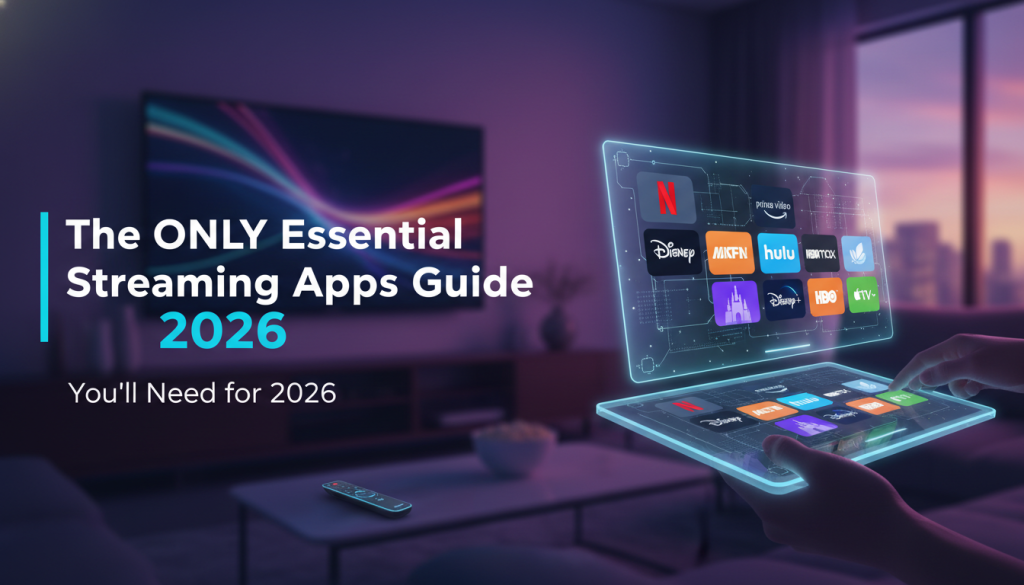
Welcome, seasoned streamers. The digital currents of entertainment are shifting faster than ever, and 2026 promises a landscape dramatically different from even a year or two ago. For those who’ve navigated the early waves of streaming, the challenges now aren’t just about finding content, but about optimizing value, securing privacy, and cutting through the noise. This isn’t another basic list; it’s a strategic playbook designed for experienced users ready to master the complexities of the evolving streaming universe.
This guide will equip you with expert insights into the future of streaming, a deep dive into the truly essential apps for 2026, and practical strategies to maximize your viewing experience while safeguarding your digital footprint. Prepare to confidently chart your course through the next era of entertainment.
Predicting the Future: Emerging Trends & Technologies Shaping Streaming in 2026
The streaming landscape of 2026 is no longer a race for subscribers but a multifaceted battle for user attention and engagement. With streaming surpassing the combined usage of cable and broadcast in 2025, and the global subscription over-the-top (SVOD) market projected to exceed $165 billion in 2026, understanding the underlying shifts is paramount.

AI-Driven Personalization
Forget generic recommendations. A new wave of AI in 2026 will profoundly reduce content search time, which averaged a frustrating 20 minutes in 2025. AI streaming agents will provide hyper-personalized recommendations based on your profiles, preferences, and real-time context. Platforms like Netflix are already leveraging AI for dynamic thumbnail selection and sophisticated content strategy, with the aim to adapt recommendations mid-session based on your immediate viewing behavior. This means less endless scrolling and more instant gratification.
Interactive Content Experiences
Live streaming is evolving into a truly interactive realm. Expect real-time Q&A sessions, integrated polls, and dynamic chat features to become standard, allowing you to directly engage with content creators and fellow viewers. Beyond live events, the seeds of “choose-your-own-adventure” style narratives and other interactive storytelling formats are beginning to sprout, offering deeper immersion.
Metaverse Integration
Extended Reality (XR), encompassing Virtual Reality (VR) and Augmented Reality (AR), will play an increasingly larger role in 2026. While full “Metaverse” adoption is still nascent, expect early glimpses of immersive streaming environments, particularly in sports and live events. Imagine watching a game from a VR courtside seat or overlaying AR statistics onto your living room screen. This technology will foster new forms of social viewing, bringing friends and communities together in virtual spaces around shared content.
The Impact of Subscription Fatigue
With the average monthly streaming bill reaching $74 in 2025, subscription fatigue is a real concern. The market is moving away from consumers juggling a dozen individual subscriptions. This has fueled the rise of ad-supported models and consolidated offerings. Strategies for navigating this overcrowded market will involve a keen eye on value, content bundling, and the strategic use of free services.
Super-Aggregators and Bundles
Market consolidation is expected, with “super aggregators” potentially dominating by bundling not just entertainment, but also commerce and community features. Cross-platform bundles combining TV with gaming, music, grocery delivery, and fitness subscriptions will expand. We might even see a universal content search engine from a major player like Prime Video, encompassing services outside its own ecosystem, drastically simplifying content discovery and subscription management. The lines between traditional broadcasters and streaming giants are blurring, with broadcasters striking distribution deals with streamers and even piping live programming directly into platforms like Netflix.
The Core Essentials: Must-Have Streaming Apps for 2026 (Deep Dive)
While the strategies of major players are evolving, a core set of apps remains indispensable. Here’s an in-depth look at the platforms defining essential streaming in 2026.

Netflix
Key Features: Global leader with over 312 million subscribers as of June 2025. Known for its vast content library, frequent new releases, critically acclaimed originals, and advanced AI personalization. Supports 4K and HDR streaming, offline downloads, and multiple user profiles.
Content Highlights: A diverse range of movies, TV series, documentaries, and stand-up specials. Netflix’s AI system is a standout, leveraging user behavior for hyper-personalization, including dynamic thumbnail selection.
2026 Predictions: Will continue its reign, generating around $2 billion in ad revenue by 2026, solidifying its ad-supported tier. Rumors suggest it could even absorb competitors like HBO Max.
Free vs. Paid: Paid-only (with ad-supported and ad-free tiers). The ad tier offers significant savings for nearly the same content.
Amazon Prime Video
Key Features: Excellent value, included with an Amazon Prime subscription or available standalone. Boasts a wide range of movies and series, including originals. Supports 4K HDR and offline downloads.
Content Highlights: A mix of blockbuster movies, popular TV shows, and high-quality originals like The Lord of the Rings: The Rings of Power. Features the ability to rent/buy additional titles.
2026 Predictions: Prime Video defaulted all users to ads in 2024, emphasizing the ad-supported dominance trend. It may introduce a universal content search engine that includes services outside the Amazon ecosystem.
Free vs. Paid: Paid (included with Prime or standalone subscription), but now with ads by default. An ad-free upgrade is available.
Hulu
Key Features: Excels at offering current TV episodes, often available hours after broadcast, making it a favorite for “next-day” viewing. Strong back catalog and critically acclaimed originals. Offers Hulu + Live TV for cable replacement.
Content Highlights: Network TV shows (ABC, Fox, NBC), a robust library of older series, and Hulu Originals like The Handmaid’s Tale.
2026 Predictions: Hulu has seen a jump in popularity, partly due to strategic distribution deals, such as the one with Charter. Expect its integration with Disney+ to become even more seamless, possibly leading to tighter bundling options.
Free vs. Paid: Paid (ad-supported and ad-free tiers). Hulu + Live TV is a premium paid option.
Disney+
Key Features: Ideal for families and fans of franchises like Marvel, Star Wars, Pixar, and National Geographic. Offers a wide range of content and originals, supports 4K streaming and offline downloads.
Content Highlights: Exclusive access to the Marvel Cinematic Universe, Star Wars saga, Pixar animated films, and nature documentaries.
2026 Predictions: Will continue to be a cornerstone for family entertainment and franchise fans, likely integrating even more deeply with Hulu for a comprehensive entertainment bundle.
Free vs. Paid: Paid-only (ad-supported and ad-free tiers).
Max (formerly HBO Max)
Key Features: Known for premium, award-winning dramas and a deep library from Warner Bros. Discovery, including HBO, DC Comics, and Discovery channels. Offers ad-supported and ad-free tiers, with a premium 4K option.
Content Highlights: Unparalleled HBO original series (House of the Dragon, The Last of Us), DC Universe films and series, classic Warner Bros. movies, and Discovery’s factual entertainment.
2026 Predictions: There are rumors of Netflix potentially absorbing HBO Max in 2026, which would significantly reshape the premium content landscape.
Free vs. Paid: Paid (ad-supported and ad-free tiers, with 4K only on premium).
Best Free Movie Apps 2026: Stream Movies & TV Shows Without Subscription
Read More →Apple TV+
Key Features: Recognized for its meticulously produced, cinematic originals and high-quality video. Integrates seamlessly with other Apple products.
Content Highlights: Award-winning shows like Ted Lasso, Severance, and Pachinko, along with high-budget films.
2026 Predictions: Will continue its focus on quality over quantity, attracting subscribers with prestige content and deep integration into the Apple ecosystem.
Free vs. Paid: Paid-only.
Peacock
Key Features: A budget-friendly option from NBCUniversal, offering a strong lineup of comedies, Universal films, and live sports.
Content Highlights: Popular TV shows like The Office and Parks and Recreation, Universal movie library, and significant live sports content including Premier League soccer, Sunday Night Football, and WWE.
2026 Predictions: Expect continued growth, especially with its strong sports offerings and a compelling free tier acting as an effective funnel for paid subscriptions.
Free vs. Paid: Free (with ads) and Paid (ad-supported and ad-free premium tiers).
Paramount+
Key Features: Caters to CBS, Showtime, and sports fans, offering a blend of live and on-demand content.
Content Highlights: NFL on CBS, UEFA Champions League, NWSL, Showtime originals, Star Trek universe, and popular CBS series.
2026 Predictions: Will solidify its position as a go-to for sports and network TV, leveraging its parent company’s vast content library.
Free vs. Paid: Paid (ad-supported and ad-free premium tiers).
YouTube TV
Key Features: An excellent choice for replacing cable, offering a wide selection of live news channels, sports, and popular entertainment.
Content Highlights: A comprehensive package of live channels, including exclusive NFL games, local news, and major sports networks. Unlimited DVR storage is a huge plus.
2026 Predictions: Will remain a top contender for live TV streaming, especially as traditional cable declines and sports rights become increasingly fragmented.
Free vs. Paid: Paid-only (with occasional free trials).
Comprehensive Installation & Setup Guides (General Tips)
* Smart TVs: Most essential apps are pre-installed or easily downloadable from the TV’s app store. Ensure your TV’s firmware is updated for optimal performance.
* Roku/Fire Stick/Apple TV: Navigate to the channel/app store, search for the desired app, and install. Sign in with your existing credentials.
* Gaming Consoles (Xbox, PlayStation): Access the console’s store (Microsoft Store, PlayStation Store), search for the app, download, and sign in.
* iOS/Android Devices: Download from the App Store or Google Play Store. Apps often support casting to compatible TVs.
Common Troubleshooting Tips
* Buffering: Check your internet speed (a wired connection is often best for devices like Nvidia Shield), close other bandwidth-heavy applications, restart your router and modem, or lower the streaming quality.
* Login Issues: Double-check credentials. If problems persist, reset your password. Ensure the app is updated.
* Device Compatibility: Ensure your device supports the app’s minimum requirements and is running the latest firmware. For 4K/HDR, verify your TV and HDMI cables support these standards.
* App Freezing/Crashing: Force close and restart the app. If that doesn’t work, clear the app’s cache (in device settings) or uninstall and reinstall.
Maximizing Value: The Best Free Streaming Apps in 2026
With the average monthly streaming bill hitting $74 in 2025, free, ad-supported streaming (FAST) services are no longer just supplementary; they’re essential. They offer substantial value and are critical for a balanced streaming diet.

Beyond the Basics: In-depth Comparisons
* Tubi: Owned by Fox, Tubi is a powerhouse, boasting over 275,000 movies and TV show episodes, 300+ originals, and nearly 300 live channels, including sports content like NBA G League TV and NFL Network. No sign-up is required, making it incredibly accessible. Its massive library and wide genre coverage make it a top contender.
* The Roku Channel: Offers over 500 live TV channels and thousands of movies and TV shows. Pre-installed on Roku devices but accessible without them, it features exclusive content like MLB Sunday Leadoff games for free. In October 2025, The Roku Channel and Tubi combined accounted for 5% of total TV viewing time, surpassing Prime Video or Disney+ individually – a testament to their growing influence.
* Pluto TV: Owned by Paramount, Pluto TV specializes in channels devoted to specific shows or themes, providing a “sit-back TV” experience. With hundreds of live channels and thousands of on-demand titles, it’s great for channel surfing without a cable bill.
* Amazon Freevee: A full-fledged platform operating within Prime Video (and as a standalone app), Freevee offers hit movies, popular series, and original shows without requiring a Prime subscription. It’s Amazon’s strong play in the FAST market.
* Plex: Started as a media server, Plex has expanded significantly, now offering 300+ live channels and thousands of on-demand movies and shows, including indie films and TV classics. Crucially, it still allows users to stream their personal media alongside its free content. No account is needed to start watching.
* Sling Freestream: The free tier of Sling TV, providing nearly 700 live channels and over 40,000 hours of on-demand content. It’s a robust option for national news, game shows, and true crime enthusiasts.
Cord Cutting Statistics 2026: Future of TV & Streaming
Read More →* YouTube: A leading service for content viewing, comprising 12.6% of all streaming time as of September 2025. Beyond user-generated content, it offers long-form content, live news, sports highlights, and official uploads of movies and shows with ads.
* Other Notable Free Services:
* Hoopla & Kanopy: Require a library card for access to indie films, classics, documentaries, audiobooks, and comics – a hidden gem for cinephiles.
* Angel Studios: Family-friendly, crowdfunded content.
* Curiosity Stream (free tier): Documentaries and non-fiction.
* DirecTV Stream (free channels): Offers a selection of free channels without subscription.
* ESPN (free sports clips): For quick sports highlights and news.
* Mubi: Curated cinema with some free content.
* Filmzie & Flimrize: Lesser-known apps focusing on indie films and hidden gems.
Ad Experience Analysis
Expect consistent ad breaks across these free platforms. Ad frequency and length can vary, but generally, FAST services integrate ads similarly to traditional broadcast TV. Most platforms are getting smarter with ad targeting, using data to show more relevant commercials. While occasional repetition occurs, the trade-off for a vast, free library is often worthwhile.
Strategic Integration
Use free services to complement your paid subscriptions. If you subscribe to Disney+ for family content, Tubi or Pluto TV can fill gaps for action movies or classic TV shows without adding to your monthly bill. Leverage their diverse libraries to minimize your paid subscriptions while maintaining a rich content offering.
Discovering the Undiscovered: Niche Streaming Services on the Rise in 2026
As the market matures, the demand for specialized content grows. Niche streaming services are emerging as essential for audiences with specific interests.

Catering to Specific Interests
* Niche Sports: While live sports streaming is mainstream, niche sports programming will significantly increase in 2026. Netflix is entering this space with multiple Major League Baseball events annually (an opening night game, the Home Run Derby, and an additional special event game). Expect broader distribution for sports like volleyball, tennis, women’s leagues, professional pickleball, and cornhole, previously hard to find, now accessible through dedicated apps or expanded offerings on major platforms.
* Specialty Content Platforms: The rise of niche and vertical platforms serves specific communities. This includes services dedicated to indie films (like Mubi or Filmzie), documentaries (Curiosity Stream), anime (Crunchyroll), or even regional content.
* Crunchyroll: Remains the go-to for anime fans, offering thousands of episodes, including simulcasts from Japan, on its ad-supported tier. Essential for anyone serious about Japanese animation.
* Community-Based Streaming: Niche creators focusing on specific group experiences (e.g., theater productions, independent music concerts, specialized makeup design tutorials) are cultivating dedicated followings and fostering strong online communities directly through their platforms.
The Value Proposition of Niche
These services might become ‘essential’ for specific audiences by offering content that cannot be found elsewhere. They provide depth and expertise that general-purpose streamers can’t match, often at a lower price point or with a free tier. For dedicated enthusiasts, a niche subscription can offer more value than another general entertainment service.
How to Find and Evaluate Niche Platforms
* Discovery: Keep an eye on industry news, specialized blogs, and community forums related to your interests. Search app stores directly for specific content types.
* Evaluation: Look for a robust content library, good streaming quality, active community features (if applicable), and clear pricing. Many niche services offer free trials, allowing you to assess content quality and value before committing.
Your Digital Fortress: Data Privacy, Security, and Control in 2026
With intensified AI-driven personalization and the increasing integration of various services, understanding and controlling your digital footprint is more critical than ever in 2026.

Understanding User Data Collection
Streaming apps gather a vast amount of information: viewing habits, search history, device information, location data, and sometimes even demographic details. In 2026, as AI leverages user behavior, preferences, and potentially even biometric data (though less common for streaming) for content recommendations, awareness of what’s being collected and why becomes paramount. This data fuels hyper-personalization, but also forms a valuable profile of your entertainment consumption.
The Role of VPNs
A Virtual Private Network (VPN) is an invaluable tool for seasoned streamers. It encrypts your internet connection, enhancing your privacy by masking your IP address from your ISP and potentially the streaming services themselves. VPNs can also help bypass geo-restrictions, allowing you to access content libraries available in other regions (though this may violate some service’s terms of service, so proceed with awareness). Using a reputable VPN adds an extra layer of security and control over your data.
Parental Controls and Family Management
Setting up robust parental controls is crucial for families. Most major streaming platforms offer granular settings to restrict content based on ratings, set up kid profiles, and manage screen time. Leverage these features to create a safe viewing environment for younger users. Teach older children about online safety and privacy.
Best Practices for Account Security
* Multi-Factor Authentication (MFA): Always enable MFA if available. This adds a critical layer of security, requiring a second verification method (like a code from your phone) beyond just your password.
* Strong, Unique Passwords: Use long, complex passwords that combine letters, numbers, and symbols, and avoid reusing passwords across different services. A password manager can help you manage these effectively.
The Ultimate Guide to Google TV & Android TV: Future-Proof Your Entertainment for 2026
Read More →* Recognizing Phishing Attempts: Be vigilant against suspicious emails or messages asking for your login credentials. Streaming services will rarely ask for your password via email. Always go directly to the official website to log in or manage your account.
* Regular Review: Periodically review your privacy settings on each streaming app to ensure they align with your preferences, especially as new features or policies are introduced.
Optimizing Your Streaming Ecosystem: Advanced Tips for Seasoned Streamers
Beyond simply choosing the right apps, optimizing your entire streaming ecosystem is key to a seamless, high-quality experience in 2026.

Device Compatibility & Performance
Ensuring your hardware keeps up with 2026 streaming demands is critical.
* Best Overall Devices:
* Roku Ultra (2025): Best overall for its neutral position (access to virtually all major services), improved Wi-Fi, faster processor, and comprehensive search across platforms.
* Chromecast with Google TV: Best overall streaming device for its slick interface, excellent 4K HDR quality (up to 60fps), and seamless “casting” capabilities.
* Premium Options:
* Apple TV 4K (3rd Gen): Ideal for Apple users, offering seamless integration with other Apple products and high-end gaming.
* Amazon Fire TV Cube (2025 Model): Powerful 4K streaming, hands-free Alexa control, advanced Wi-Fi 6E connectivity, and a significantly faster processor.
* Nvidia Shield TV Pro: Most powerful Android TV streaming media player, ideal for gamers and those needing maximum processing power, supporting AI upscaling to 4K and Dolby Atmos audio.
* Budget-Friendly Options:
* Amazon Fire TV Stick Lite: Impressive value at $29.
* Roku Express 4K: Versatile and affordable.
* Roku Streaming Stick 4K: Enhanced Wi-Fi, Dolby Vision, supports all major platforms.
Network Requirements & Troubleshooting
A stable and fast internet connection is non-negotiable for 4K and HDR streaming.
* Speed: Aim for at least 25 Mbps for reliable 4K streaming.
* Wired vs. Wireless: A wired Ethernet connection is recommended for Android TV boxes and other stationary devices for superior stability and speed compared to Wi-Fi.
* Router Placement: Place your Wi-Fi router centrally and away from obstructions.
* QoS (Quality of Service): Configure your router’s QoS settings to prioritize streaming traffic.
* Troubleshooting: Restart your router regularly. Check for firmware updates for your router. Contact your ISP if issues persist.
Subscription Management Strategies
With the rise of bundles and consolidation, smart management is key to avoiding subscription fatigue and churn.
* Bundling: Actively seek out discounted streaming bundles that combine TV with gaming, music, or even mobile services.
* Churning: Don’t be afraid to temporarily cancel services you’re not actively watching, then resubscribe when new content you want to see drops.
* Aggregated Platforms: Utilize universal search features (like a potential one from Prime Video) or third-party apps designed to track all your subscriptions and help you discover content across them.
* Payment Tracking: Use a dedicated app or spreadsheet to monitor your monthly spending on streaming services.
Customization & Accessibility
Leverage app settings to personalize your viewing experience.
* User Profiles: Maximize the use of individual user profiles for tailored recommendations and viewing history.
* Picture & Sound Settings: Adjust your TV’s picture mode (e.g., Filmmaker Mode) and audio settings for the best quality. Explore spatial audio options if your system supports them.
* Accessibility Features: Utilize closed captions, audio descriptions, and playback speed controls to enhance your experience.
Conclusion: Charting Your Course Through the Future of Streaming
The streaming universe in 2026 promises a highly personalized, interactive, and diverse entertainment experience. The shift towards ad-supported models and content bundling will reshape how we access and pay for content. AI will be central to discovery and engagement, while niche content and immersive technologies like VR/AR will offer new avenues for entertainment.
By staying informed about these trends, strategically choosing essential and free apps, and optimizing your streaming ecosystem with the right devices and practices, you can confidently navigate this evolving digital landscape. Embrace the future, explore new content, and personalize your 2026 streaming journey to be as rewarding and seamless as possible. The power to curate your ultimate entertainment experience is firmly in your hands.