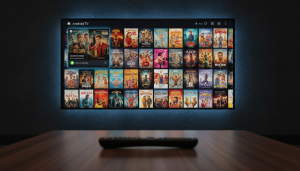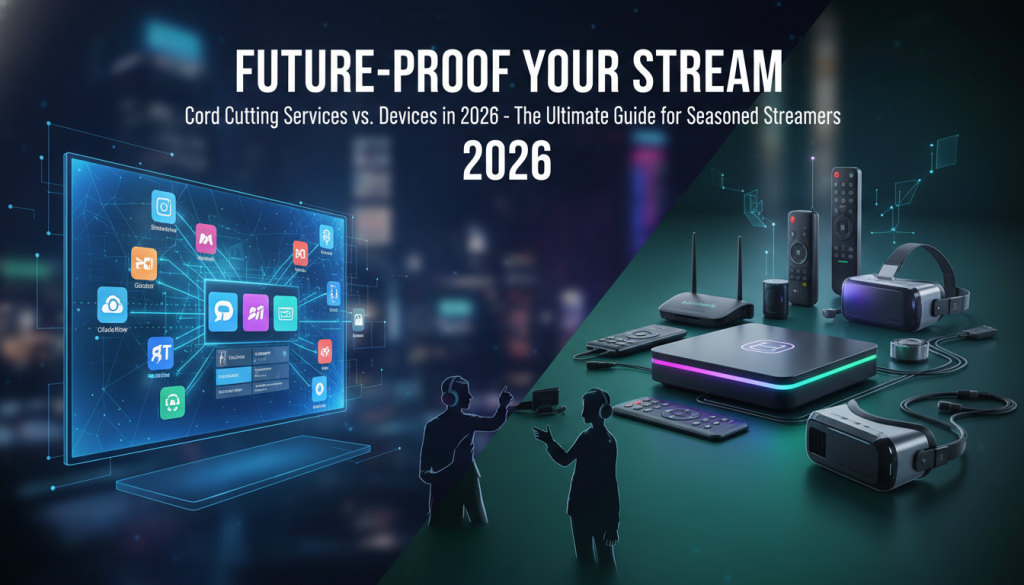
The landscape of home entertainment is undergoing its most profound transformation in decades. For seasoned streamers, merely cutting the cord is no longer enough; the challenge now lies in strategically navigating a complex ecosystem of services and devices to future-proof their entertainment experience. As we accelerate toward 2026, the choices you make today will define your streaming satisfaction for years to come.
This comprehensive guide will go beyond current trends, offering an authoritative, insightful, and forward-looking analysis of the crucial decisions facing cord-cutters. We’ll delve deep into the evolving content ecosystem of streaming services, the cutting-edge hardware frontier of streaming devices, and the transformative impact of artificial intelligence on both. Our goal is to empower you with deep knowledge and strategic advice, guiding you through complex choices with confidence, ensuring you master your stream in 2026 and beyond.
Introduction: Navigating the 2026 Cord-Cutting Crossroads
The shift away from traditional linear television is not just continuing; it’s accelerating dramatically. By 2026, the number of cord-cutting US households is projected to reach an staggering 80.7 million, significantly outnumbering traditional pay-TV households, which are expected to drop to 54.3 million. This means roughly 75% of U.S. households with a TV are anticipated to have completely cut traditional TV subscriptions by the end of 2026. The primary drivers are clear: the high costs and rigid contracts of traditional cable TV, coupled with an undeniable preference for flexible, on-demand streaming.
This isn’t just about saving money; it’s about anticipating technological shifts, the pervasive integration of artificial intelligence, and dynamic market consolidations that will reshape how we consume media. This guide will provide a deep dive into the nuanced debate of cord cutting services vs devices 2026, offering future-proofing strategies and examining long-term value to help you craft the ultimate streaming setup.

The Evolving Cord-Cutting Landscape by 2026: Beyond Current Trends
The streaming revolution has officially surpassed traditional broadcast and cable in terms of usage, fundamentally altering the industry’s power dynamics. Looking to 2026, we’re observing a market characterized by intense consolidation, with major streaming platforms actively pursuing mergers to reduce competition and form “super aggregators” or “mega players.” This strategic maneuvering could lead to a noticeable decrease in the number of generic Tier 1 SVOD (Subscription Video on Demand) services as companies strive for market dominance and efficiency.
A significant trend is the explosive growth of ad-supported streaming (AVOD) and free ad-supported streaming (FAST) channels. FAST channels alone are predicted to capture a 10% share of total TV viewing in 2026, indicating a mainstream acceptance of advertising in exchange for lower costs or free content. It’s projected that 100% of audiences will encounter video ads across their streaming journeys by 2026, marking a pivotal shift even for those accustomed to “ad-free” viewing.
Live sports have also emerged as a critical growth lever for streaming platforms. Major leagues are increasingly making their content available exclusively online, with platforms like YouTube TV securing deals for more affordable, sports-focused “skinny bundles” launching in 2026. This signals a future where premium live events are firmly embedded within the streaming ecosystem, attracting new subscribers and shaping content strategies.
Deep Dive: Cord-Cutting Services in 2026 – The Content Ecosystem
The content ecosystem in 2026 is less about sheer volume and more about intelligent curation and hyper-personalization. Services are fiercely competing to offer value that transcends mere subscription fatigue.
Subscription Fatigue vs. Personalized Value: How Services Will Adapt
The era of subscribing to every major service simultaneously is waning. In 2026, services will thrive by leveraging AI to optimize content strategies based on audience preferences and engagement patterns, ensuring every dollar spent by a viewer delivers maximum perceived value. This intense focus on personalized experiences, driven by AI, is paramount.
AI’s Transformative Role in Content Discovery and Personalization
Artificial intelligence will be the invisible hand guiding your streaming experience. Expect highly tailored suggestions on home screens and during searches, making content discovery more seamless and efficient. This will shrink the time viewers spend searching for content, projected to be down from an average of 20 minutes in 2025, freeing up more time for actual viewing.
The Evolution of Ad-Supported Tiers: Smarter, Less Intrusive Ads
Ad-supported tiers are not just becoming ubiquitous; they’re becoming sophisticated. With 100% of audiences projected to encounter ads by 2026, these ads will be powered by AI and automation, leading to higher precision and efficiency in campaigns. Expect hyper-localized advertising and generative AI-powered creatives designed to be more resonant and less disruptive, potentially even becoming interactive.
Bundling Strategies, Mega-Bundles, and the Rise of Super-Aggregators
The “streaming squeeze” is real, with many consumers finding themselves unable to afford all desired services. Bundling will continue to be a key strategy for both consumers seeking savings and platforms aiming to reduce churn. The market is ripe for the rise of “super aggregators” – platforms or partnerships offering mega-bundles that consolidate multiple services into a single, streamlined subscription, challenging the traditional à la carte model with new, comprehensive packages.
Pros and Cons for 2026: Flexibility vs. Fragmentation
Pros: Unprecedented flexibility to choose content, vast and diverse libraries, and increasingly personalized experiences thanks to AI. The rise of niche and vertical streaming platforms, catering to specific communities, along with the “creator economy” expanding to connected TV, means more specialized content than ever before. For instance, at least one major streaming service beyond YouTube is expected to add a “creator” tab in 2026. Platforms like YouTube and Netflix are also converging, offering more varied content styles.
Cons: Despite bundling efforts, potential for price creep as services increase individual prices (e.g., Paramount+ eliminating free trials in 2026 while increasing prices), and ongoing content fragmentation across numerous platforms. This might force consumers into “frenemy” relationships between streamers and broadcasters (e.g., Warner Bros. Discovery divesting linear networks ahead of a potential Netflix merger) to secure content.
Fire TV Stick vs. Roku 2025: Real-World Speed Tests & Buyer’s Guide for New Streamers
Read More →
Deep Dive: Cord-Cutting Devices in 2026 – The Hardware Frontier
While services deliver the content, devices are your gateway to the experience. The global streaming devices market is projected for robust growth, with estimates ranging from reaching $16.7 billion (CAGR 13.9%) to $89.48 billion (CAGR 15.9%) by 2026, signaling significant ongoing innovation.
Hardware Innovation: AI-Enhanced Upscaling and Smart Home Integration
Streaming devices in 2026 will be defined by their enhanced computational power and connectivity. Expect faster processors for seamless user interfaces, improved voice control for intuitive navigation, and robust support for high-resolution content like 4K, HDR (High Dynamic Range), and immersive Dolby Atmos sound. Many devices will also incorporate advanced gaming features and deep smart home controls, effectively turning your streaming hub into a central command center. AI integration is a significant booster for demand in this market.
Ecosystem Compatibility and Interoperability: Navigating the Landscape
A critical factor for seasoned streamers will be a device’s ability to seamlessly integrate with a broader ecosystem. While proprietary platforms (like Apple’s) offer a cohesive experience, open platforms provide greater flexibility. The crucial consideration here is Matter compatibility, which is becoming the standard for future-proofing smart homes and ensuring devices work across Amazon Alexa, Google Assistant, and Apple HomeKit.
The Impact of Cloud Gaming and Integrated Gaming Services
Gaming consoles are predicted to show the highest Compound Annual Growth Rate (CAGR) in the streaming media devices market. Their formidable computational power, initially designed for immersive gaming, positions them perfectly for demanding streaming applications and integrated cloud gaming services. Expect devices like the NVIDIA SHIELD TV Pro (2025 model) to blur the lines between streaming and gaming.
New Form Factors and Enhanced User Interfaces
Beyond traditional boxes and sticks, devices will offer advanced user interfaces, including even more sophisticated voice control and potentially nascent gesture recognition. The goal is to make interaction effortless, intuitive, and deeply integrated into your smart home. Look for new models of key players such as Roku Ultra (2025 model), Fire TV Cube (2025 model), and Apple TV 4K (3rd Generation) to lead these innovations.
Pros and Cons for 2026: Control, Longevity, and Initial Investment
Pros: Investing in a robust device offers unparalleled control over your streaming experience, higher performance, and better longevity compared to relying solely on smart TV apps. Dedicated devices often receive more consistent software updates and broader codec support.
Cons: The initial investment can be higher than opting for basic smart TV functionality. There’s also the potential for obsolescence as technology rapidly advances, and some devices may lock you into specific proprietary ecosystems, limiting interoperability.

AI’s Transformative Impact on Cord Cutting: Services & Devices in 2026 (Pillar Content Focus)
Artificial intelligence is not just a feature; it’s the underlying infrastructure that will redefine the cord-cutting experience in 2026. Its impact spans content discovery, device performance, advertising, and even content creation itself.
AI in Content Discovery and Recommendations: Predictive Viewing Habits
AI will make content discovery truly seamless and efficient, shrinking the time viewers spend searching for content (down from 20 minutes in 2025). This manifests as hyper-personalized recommendations at both the platform and app levels, with tailored suggestions appearing on home screens and intelligently guiding searches. AI analyzes your viewing habits, preferences, and even emotional responses to curate content that resonates deeply.
AI in Device Performance and User Experience: Adaptive Streaming
On the device front, AI will enhance performance through adaptive streaming, which intelligently adjusts video quality based on your internet speed and device capabilities to prevent buffering. It will also manage power consumption more efficiently and power increasingly sophisticated voice assistants that understand complex commands and context, becoming truly invisible improvements to the user experience. By 2026, AI will become “boring”—fading into the background as it invisibly improves virtually every interaction.
Personalized Ad Delivery and the Evolving Landscape of User Privacy Concerns
AI and automation will revolutionize streaming advertising. Expect campaigns with unprecedented precision and efficiency, leading to more resonant ads for viewers. This includes hyper-localized advertising, generative AI-powered creatives for enhanced effectiveness, and dynamic ad insertion that places relevant ads seamlessly into content. However, this raises valid concerns about user privacy, necessitating transparent data practices and robust privacy controls.
The Future of Interactive Content and AI-Generated Experiences
AI is also impacting content creation workflows, moving from supporting roles to primetime with automated editing, captioning, and quality enhancement. Generative video is on the horizon, raising fascinating questions about human jobs, creativity, and intellectual property. Furthermore, Natural Language Processing (NLP) will enhance interactive viewer experiences through intelligent chatbots for customer support or even integrated into content itself, alongside real-time translation in live streaming.
The ONLY Essential Streaming Apps Guide You’ll Need for 2026
Read More →The Long-Term View: Cost-Effectiveness and ROI (2026-2031 Outlook)
While cord-cutting offers flexibility, managing costs remains a primary concern. The “streaming squeeze” is a reality, with 63% of U.S. streamers unable to afford all their desired services, and 55% reporting higher-than-preferred monthly costs. This necessitates a strategic long-term view.
5-Year Cost Projection: Services vs. Devices
Over the next five years, recurring service subscriptions (including ad-free upgrades) will likely outweigh the initial device investment. While some streaming services like Paramount+ are increasing prices and eliminating free trials in 2026, they generally aim to remain competitively priced compared to traditional cable. To mitigate rising costs, viewers are increasingly rotating subscriptions, utilizing ad-supported tiers, or bundling services.
Calculating Actual Return on Investment (ROI) for Hardware
For significant hardware purchases, calculating ROI involves considering not just the initial cost but also the device’s longevity, performance enhancements over time (e.g., AI upscaling reducing the need for new TVs), and energy consumption. A premium device with broad compatibility and future-proof features (like Matter support) can offer better long-term value by extending its useful life and enhancing the overall experience.
The ‘Future-Proofing’ Aspect: Minimizing Recurring Costs
Strategies to minimize recurring costs are crucial. Bundling is a proven tactic, with 68% of subscribers already using bundles or indirect subscriptions, reporting average monthly savings around $16.32. Ad-supported tiers are expanding, and 60% of consumers are willing to accept more ads for a larger discount, with 42% having already downgraded to lower-cost ad-supported plans. The overall goal for consumers is flexibility and affordability, solidifying the move towards an à la carte entertainment model, far removed from channel-for-channel cable replacements.
Impact of Inflation, Service Price Increases, and Hardware Depreciation
Inflation and ongoing service price increases will continue to challenge budgets. Simultaneously, hardware depreciation means a device purchased today will be worth less tomorrow. Strategic future-proofing involves balancing these factors by making informed choices about both your service portfolio and device investments, prioritizing adaptability and value.

Ecosystem Compatibility & Interoperability Challenges/Solutions in a Smart Home Environment
In 2026, seamless multi-device experiences are the norm, with streaming extending across connected TVs, mobile, tablets, laptops, and even in-car platforms. This demands scalable delivery and consistent experiences across all your devices.
Seamless Integration: Devices, Smart TVs, and Voice Assistants
Your streaming device is no longer an isolated gadget; it’s a key component of your smart home. Ideally, it should interact effortlessly with smart TVs, soundbars, voice assistants like Amazon Alexa and Google Assistant, and other smart home technologies. Smart home hubs, such as the Google Nest Hub and Amazon Echo Dot (5th Gen), act as central command centers, integrating streaming with lighting, thermostats, and security systems. For example, AI-powered Alexa routines can create customized entertainment experiences by dimming lights and turning on the TV with a single voice command.
Challenges: Proprietary Ecosystems and Fragmented Standards
The primary challenge lies in the fragmentation caused by proprietary ecosystems and differing standards. Devices and services from various brands don’t always communicate smoothly, leading to potential device-service conflicts and a less-than-unified experience. This complexity can increase setup time and lead to frustration for seasoned streamers seeking simplicity.
Solutions: Universal Standards and Consolidating Workflows
The Matter compatibility standard is a game-changer for future-proofing smart homes. By ensuring devices work across multiple platforms (Amazon Alexa, Google Assistant, Apple HomeKit), Matter reduces compatibility headaches. Many new smart home products, including those from IKEA, are launching with Matter support. For media companies, consolidation of streaming workflows is becoming critical to reduce complexity, cut costs, and improve reliability in this fragmented, device-driven world, ultimately benefiting the consumer experience. Embracing Matter-compatible devices and utilizing smart hubs are key solutions to optimizing the multi-device, multi-service household for a truly unified experience.

Choosing Your Ideal 2026 Cord-Cutting Setup: A Strategic Framework for Seasoned Streamers
Crafting the perfect cord-cutting setup in 2026 requires a strategic approach tailored to your unique habits, preferences, and budget.
User Habits Analysis: Content Consumption and Mobility Needs
Before making any decisions, analyze your content consumption patterns. Do you prioritize live sports or niche documentaries? Are you a binge-watcher or an occasional viewer? Consider your device preferences—do you prefer a dedicated streaming box, smart TV apps, or mobile viewing? Lastly, assess your mobility needs: do you stream primarily at home, or do you require robust on-the-go access?
Prioritizing Flexibility, Affordability, and Personalization
Cord Cutting Statistics 2026: Future of TV & Streaming
Read More →Seasoned streamers should prioritize three core pillars:
* Flexibility: The ability to easily switch services, access content across multiple devices, and adapt to market changes.
* Affordability: Optimizing subscriptions through bundles, ad-supported tiers, and smart device investments to maximize long-term ROI.
* Personalization: Leveraging AI-driven recommendations and a tailored content ecosystem.
Evaluate services based on their content libraries (including niche content and live sports), the availability and quality of ad-supported options, and potential bundling opportunities to maximize cost savings.
AI Integration Preferences: How Much Automation Do You Desire?
Consider how much AI-driven personalization and automation you desire. Do you want an entirely hands-off experience with predictive viewing, or do you prefer more manual control? This will influence your choice of services and devices, as some platforms and hardware are more deeply integrated with AI for content discovery and smart home routines.
Scenario-Based Recommendations
* The Minimalist Streamer: Focus on 1-2 core SVODs, leverage FAST channels, and use a reliable, budget-friendly, Matter-compatible streaming stick.
* The Tech Enthusiast: Invest in a premium streaming device with robust AI processing (e.g., NVIDIA SHIELD TV Pro), a comprehensive suite of ad-free services, and full smart home integration via a central hub.
* The Family Entertainment Hub: Opt for a flexible bundle of services covering diverse tastes, a versatile streaming box supporting multiple profiles and gaming, and seamless integration with family-friendly smart home routines.
Look for devices that offer broad compatibility with various streaming platforms and support advanced audio/video formats. Crucially, choose devices with robust AI features for enhanced content discovery and an intuitive user interface. Integrate streaming into your smart home ecosystem by selecting Matter-compatible devices and utilizing smart hubs and voice assistants for a unified and automated entertainment experience.
2026 Cord-Cutting Future-Proofing Guide: Actionable Tips & Best Practices
To ensure your streaming setup remains cutting-edge and cost-effective through 2026 and beyond, follow these actionable tips:
1. Embrace Ad-Supported Tiers: Many services now offer cheaper ad-supported plans. While some ads will be unavoidable, leveraging these tiers can significantly reduce monthly costs, especially for services you use less frequently.
2. Explore Bundling Options: Actively seek out bundles offered by streaming services themselves or through telecom providers. Bundling multiple services can lead to substantial savings and simplify billing.
3. Prioritize AI-Enhanced Platforms: Opt for services and devices that visibly (or invisibly) leverage AI for personalized recommendations, seamless content discovery, and adaptive streaming. This will enhance your user experience and save you time.
4. Invest in Matter-Compatible Devices: When purchasing new streaming devices or smart home gadgets, ensure they support the Matter standard. This guarantees long-term interoperability and easier integration into your growing smart home ecosystem.
5. Stay Informed on Content Rights: The streaming market is dynamic. Keep an eye on news regarding shifting content licensing, potential mergers (like WBD’s potential Netflix merger), and exclusive deals that could affect your favorite service’s offerings.
6. Evaluate Live TV “Skinny Bundles”: For sports fans or those who still desire some live TV, consider specialized, cheaper live TV bundles from providers like YouTube TV that focus on specific genres, rather than paying for hundreds of unwanted channels.
7. Diversify Your Content Sources: Don’t limit yourself to major SVODs. Explore the growing world of FAST channels for free content and keep an eye on the burgeoning creator economy, which is expanding its presence on connected TV.
8. Audit Your Subscriptions Regularly: Conduct a quarterly review of your streaming subscriptions. Cancel services you’re not actively using and rotate new ones in as needed to control costs and combat “streaming squeeze.”

Conclusion: Empowering Your 2026 Streaming Journey
The 2026 streaming landscape offers seasoned streamers an unprecedented canvas of choice and personalization. The debate between cord cutting services vs devices 2026 isn’t about choosing one over the other, but rather about strategically integrating both into a cohesive, intelligent, and cost-effective entertainment ecosystem.
By meticulously evaluating services for their content, ad-supported options, and bundling potential, and by selecting devices that offer robust performance, AI integration, and smart home compatibility (especially Matter), you can create a truly future-proof and highly engaging entertainment experience. The emphasis will unequivocally be on flexible, à la carte content consumption, moving further away from the rigid models of traditional linear TV.
Your journey into the future of streaming is continuous. The market will keep evolving, technologies will advance, and your preferences may shift. Therefore, the ultimate call to action is to remain agile: continuously evaluate your setup, adapt to emerging trends, and embrace the power of personalization to truly master your stream in 2026 and beyond.